
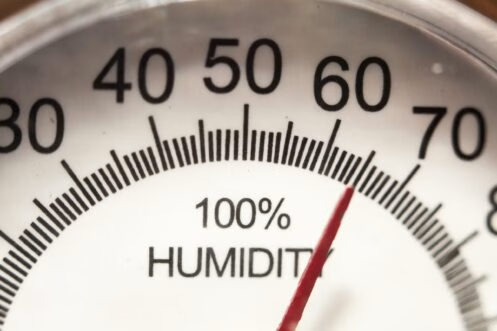
Indoor comfort is about more than just temperature. In Santa Rosa, CA, where summers bring dry heat and winter mornings can be surprisingly chilly, indoor humidity levels play a significant role in how comfortable your living spaces feel. When indoor humidity is out of balance, the effects show up in your health, your energy bills, and even the structure of your home itself. Whole-home humidifiers and dehumidifiers are two of the most effective investments a homeowner can make for long-term indoor comfort, and they work year-round alongside your existing HVAC system.
Homeowners throughout Santa Rosa who want to take control of their indoor air quality can learn more about our humidifier installation and repair services to get started.
How Does Humidity Affect Your Health?
Indoor humidity has a direct impact on how your household feels and functions from a health standpoint. When levels drop too low, the effects are familiar to anyone who has spent a dry winter indoors.
- Dry skin and chapped lips: Low humidity draws moisture from the body, leading to persistent skin irritation that no amount of lotion fully resolves.
- Sinus irritation: As the mucous membranes in the nose and throat dry out, the body becomes more vulnerable to airborne illness. Bacteria and viruses can remain suspended in dry air for longer periods, increasing the risk of respiratory infections during the colder months.
On the other end of the spectrum, high humidity brings its own set of health concerns. When moisture levels climb too high, the body has difficulty regulating its internal temperature. Sweat evaporates more slowly, reducing cooling efficiency. That leads to fatigue, dehydration, and muscle discomfort even in moderate temperatures.
High humidity also creates ideal conditions for mold and mildew spores to reproduce. In our service calls throughout Santa Rosa and surrounding Sonoma County communities, mold-related air quality issues are among the most common concerns we hear from homeowners during the summer months. Mold exposure can cause persistent respiratory symptoms, especially among household members with asthma or seasonal allergies.
How Does Humidity Affect Interior Temperature?
Humidity does not just affect how you feel physically. It shapes how your HVAC system performs and how much energy it uses to maintain a comfortable temperature.
When indoor air is too dry, it struggles to retain heat. Your heating system ends up working harder to compensate, running longer cycles to maintain the temperature set on the thermostat. That additional runtime directly translates into higher energy use and greater wear on the equipment.
The reverse problem occurs in summer. When humidity is high, the air feels significantly warmer than the actual temperature would suggest. Working with homeowners across the Bennett Valley area and in older homes near Julliard Park, we consistently find that households running whole-home dehumidifiers can set their thermostats several degrees higher while still feeling comfortable indoors. That reduction in cooling demand adds up to meaningful savings over the course of a long Sonoma County summer.
How Does Humidity Affect Your Home?
The impact of humidity extends beyond personal comfort. Excess moisture inside a home can create conditions that compromise the building and its contents.
High indoor humidity encourages mold and mildew growth on walls, ceilings, and in wall cavities. Both can cause lasting damage to drywall and structural materials. Wood is particularly vulnerable to humidity fluctuations. When moisture levels rise, wood expands. When they drop, it contracts. Over time, that cycle causes warping, cracking, and sticking in wood furniture, door frames, window frames, and flooring.
Homeowners who notice doors that stick or fail to close fully, gaps appearing in wood flooring, or paint that is peeling without an obvious cause often find that a humidity imbalance is the root of the problem rather than a structural issue.
What Is a Whole-Home Humidifier?
Most homeowners are familiar with portable humidifiers, the countertop units that require daily refilling and only treat a single room. Managing multiple portable units throughout a home is impractical, and the results are rarely consistent from room to room.
A whole-home humidifier is a product category entirely different from the others. It installs directly into your HVAC ductwork and delivers moisture evenly to every room in the house through the existing air distribution system. A dedicated humidity controller, or a smart thermostat with built-in humidity monitoring, lets you set a target humidity level. The system then maintains that level automatically, drawing from your home’s water supply without manual addition.
The result is consistent, whole-house humidity management that operates in the background without requiring daily attention.
The Many Benefits of a Whole-Home Humidifier
For Santa Rosa homeowners, the benefits of a properly sized whole-home humidifier are especially noticeable during the dry winter months when indoor heating pulls moisture from the air.
- Improved respiratory comfort: Adequate humidity helps keep mucous membranes moist, reducing susceptibility to winter illness and easing symptoms for household members with chronic sinus or breathing issues.
- Warmer-feeling air: Moisture helps air retain heat, which means your home can feel comfortable at a slightly lower thermostat setting, reducing heating costs.
- Protection for wood surfaces: Consistent humidity levels reduce the expansion and contraction cycle that causes warping and cracking in wood furniture, flooring, and trim.
- Reduced static electricity: Dry air is a major contributor to static buildup, which can be annoying and pose a minor risk to sensitive electronics.
- Long-term home value: A whole-home humidity system is a recognized improvement that can enhance a home’s resale appeal.
What Is a Whole-Home Dehumidifier?
Where a humidifier adds moisture to the air, a whole-home dehumidifier actively removes it. Like its counterpart, it integrates with your existing ductwork and operates automatically based on a set humidity target. There is no need to empty a collection tank or monitor the unit manually.
During the warmer months in Santa Rosa, when humidity from the coast and overnight marine layers can push indoor moisture levels above comfortable levels, a whole-home dehumidifier keeps indoor conditions stable. When excess humidity is removed, the body can cool itself more effectively, and the indoor temperature feels lower even without changing the thermostat setting.
Our dehumidifier installation and repair services are available to homeowners throughout the area who want to take the next step toward a more comfortable, protected home.
The Many Benefits of a Whole-Home Dehumidifier
Investing in a whole-home dehumidifier delivers benefits that go well beyond comfort during warm weather.
- Energy savings: When the home feels cooler at a higher thermostat setting, the air conditioner runs less often. That reduced runtime lowers utility costs and extends the service life of the cooling equipment.
- Moisture damage prevention: Consistently controlled humidity protects drywall, wood floors, window frames, and stored belongings from the slow, often unnoticed moisture damage that can become expensive.
- Reduced mold risk: Keeping humidity below the threshold where mold and mildew thrive is one of the most effective preventive measures a homeowner can take to improve long-term indoor air quality.
- Improved cooling system lifespan: When the air conditioner is not tasked with removing excess humidity in addition to cooling, it operates under less strain and lasts longer between major service events.
A whole-home dehumidifier pairs well with a broader indoor air quality strategy. Homeowners interested in a comprehensive approach can also explore our whole-house air purification system options for even greater control over what their household is breathing.
What Is the Best Relative Humidity Setting?
The ideal indoor humidity range varies slightly by household, but most HVAC professionals recommend maintaining relative humidity between 30 and 55 percent year-round. Levels below that range invite the dry-air problems described above. Levels above 55 percent create conditions favorable to mold growth and the structural issues associated with excess moisture.
In practice, most Santa Rosa households aim for the lower end of that range during summer and the middle during the heating season, adjusting as needed based on comfort and any signs of moisture-related issues in the home.
Breathing Easy Starts with KC
Indoor comfort in Santa Rosa is not just about the thermostat setting. Humidity control is an equally important part of a well-functioning home environment, and whole-home humidifiers and dehumidifiers are the most effective tools available for getting it right. KC Home Services Plumbing, Heating & AC Repair has been helping Sonoma County homeowners improve their indoor air quality and protect their homes for over 40 years. If you are ready to take the next step toward a more comfortable, healthier home, contact our team today to schedule a consultation.